Larissa Thessaly AR Drachm c. -370 to -360 Aleuas Eagle
Larissa, Thessaly, AR Drachm, c. -370 to -360
Lorber, Thessalian 94; BCD Thessaly 185 (same dies); HGC 4, 438; BMC 12 (same dies); Gulbenkian 473 (same dies); Jameson 2469 (same dies).
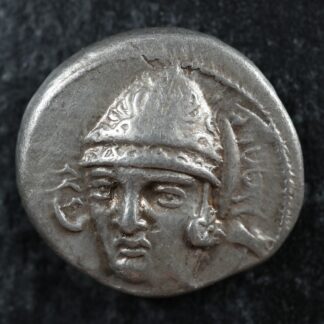
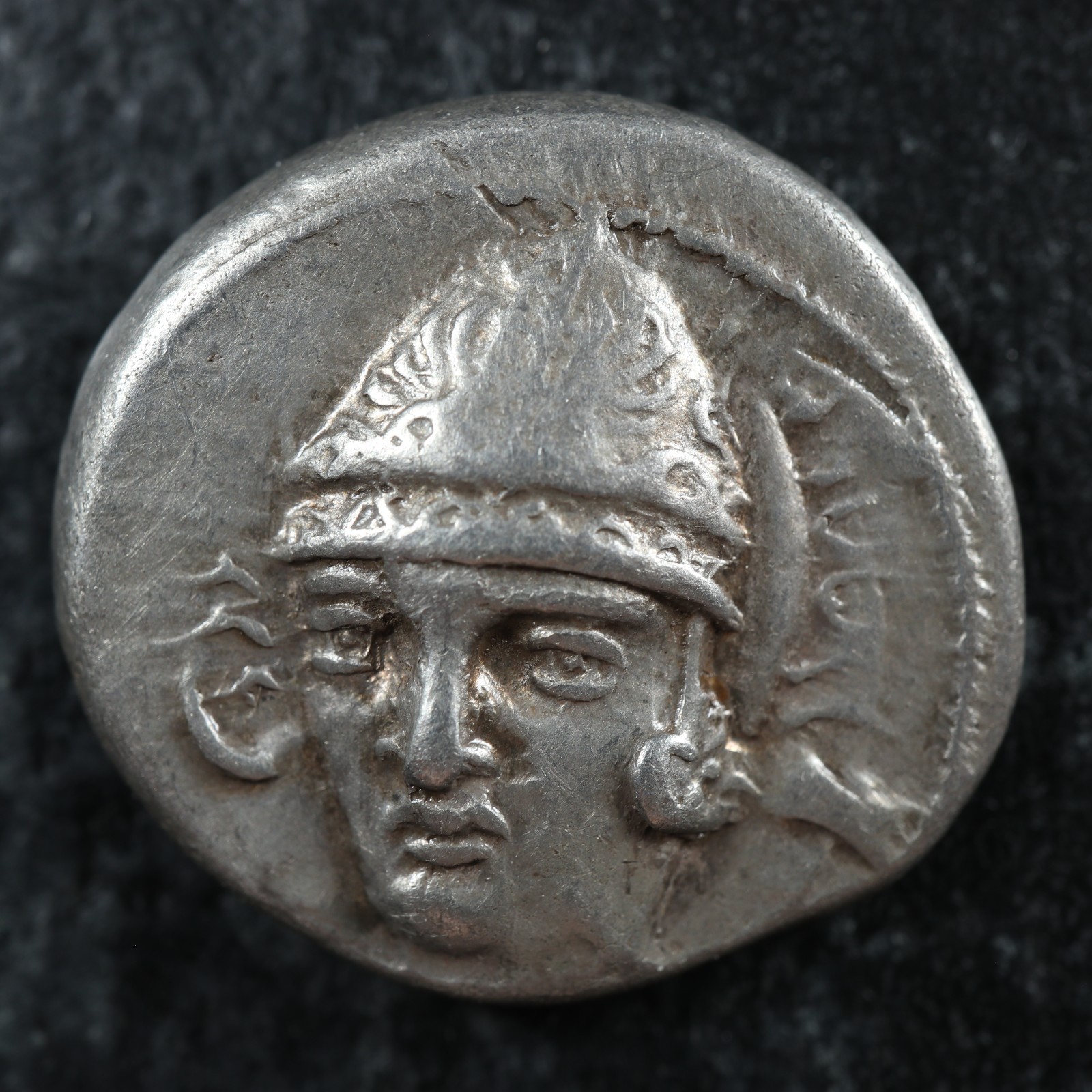
Obv: Head of Aleuas facing slightly left, wearing conical helmet; labrys and AΛEYA to right.
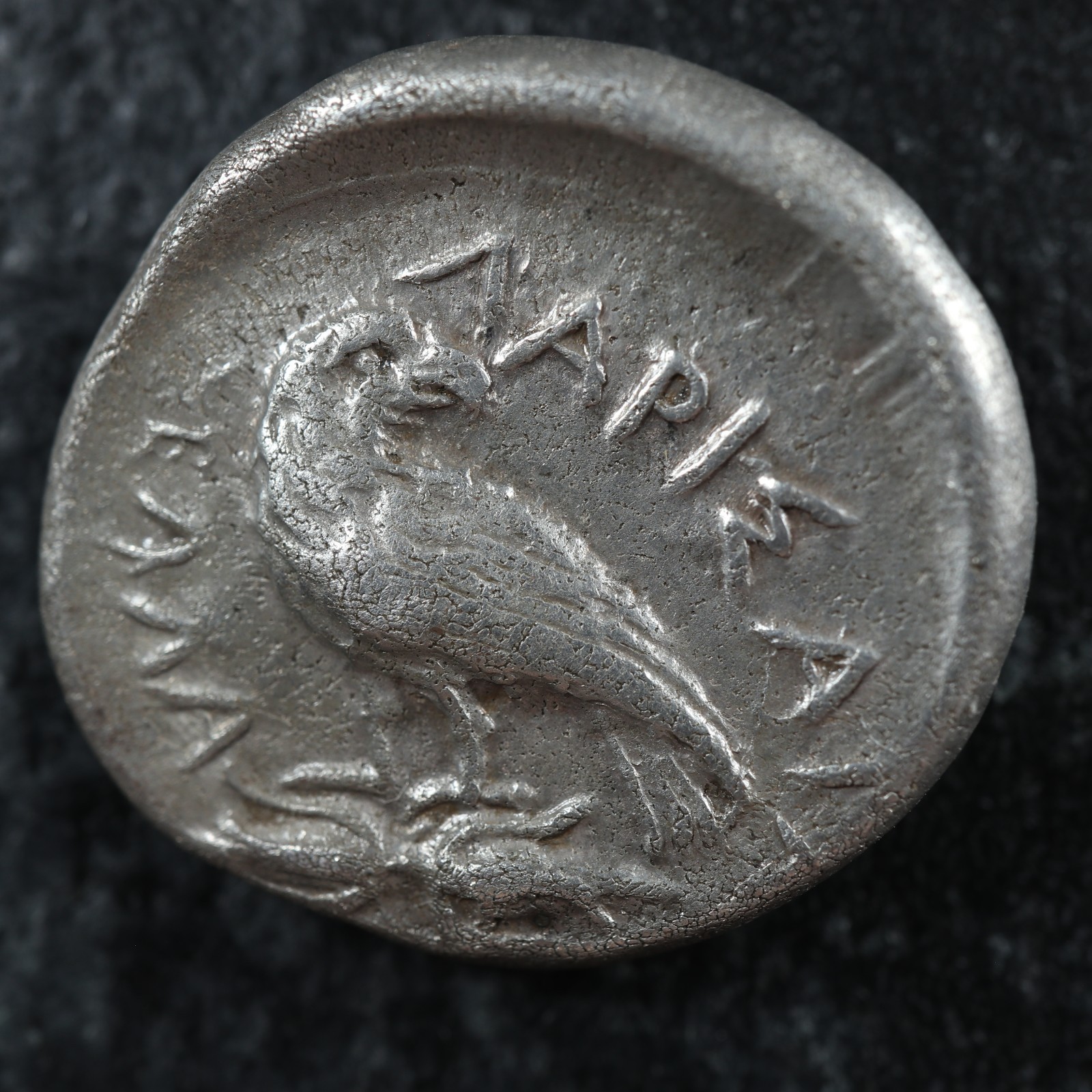
Rev: Eagle standing left, head right, on thunderbolt; EΛΛA to left, ΛAPIΣAIA to right.
5.92 g
19.1 mm
Ex. Gasvoda Collection. Ex. MACM inventory MMoCA5C; Ex. CNG, Triton XIII (5 January 2010), lot 119(Hammered at 4000$US).
Rare.
It is well known that the Aleuas drachms were struck from a single pair of dies. A number of theories surround this enigmatic issue, unique in Larissan coinage. The issue therefore must have been rather special and produced on a specific occasion. There are still unresolved differences of opinion concerning the exact date of issue and the purpose of this puzzling coin. This writer, believing that we should also take into account the possibility that such an extraordinary issue was hoarded more than the other types of coin in circulation, thus displaying less wear for a given period of time, suggests a date of minting circa 360 BC or even a little earlier.
This drachm features a striking portrait of Aleuas I, the Red-Haired (Ἀλεύας ὁ Πυρρός), depicted in a conical helmet adorned with wings and ear flaps, facing three-quarters to the left. Aleuas I was the semi-legendary progenitor of the Aleuads, the influential family that ruled over the Thessalian Larissa. His identity is clearly indicated by the inscription ΑΛΕΥ, while the reverse displays the ethnic ΛΑΡΙΣΑΙΑ alongside the unusual inscription ΕΛΛΑ. AIt has been suggested that ΕΛΛΑ refers to Hellanokrates, a name known to have been used by the Aleuads. According to Aristotle, a Larissaean aristocrat of this name was involved in the assassination of the Macedonian King Archelaos I around 399 BC (Aristot. pol. 5.1311b). Although it is unclear whether this Hellanokrates issued this very rare type several decades later, or one of his descendants, the combination of Aleuas’ portrait, the signature of the Aleuad aristocrat, and the use of the dative case (instead of the usual genitive) suggests that our Hellanokrates may have financed the coin’s emission as a form of public benefaction to his city. If this interpretation is correct, ΛΑΡΙΣΑΙΑ / ΕΛΛΑ can be understood as 'Hellanokrates [to the] Larissaeans'.
______________________________
In stock
Produits connexes
-
Etenna Pisidia AE14 1st century BC Nymph + Two men
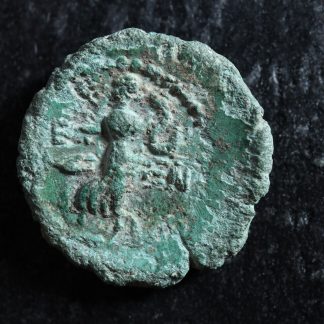
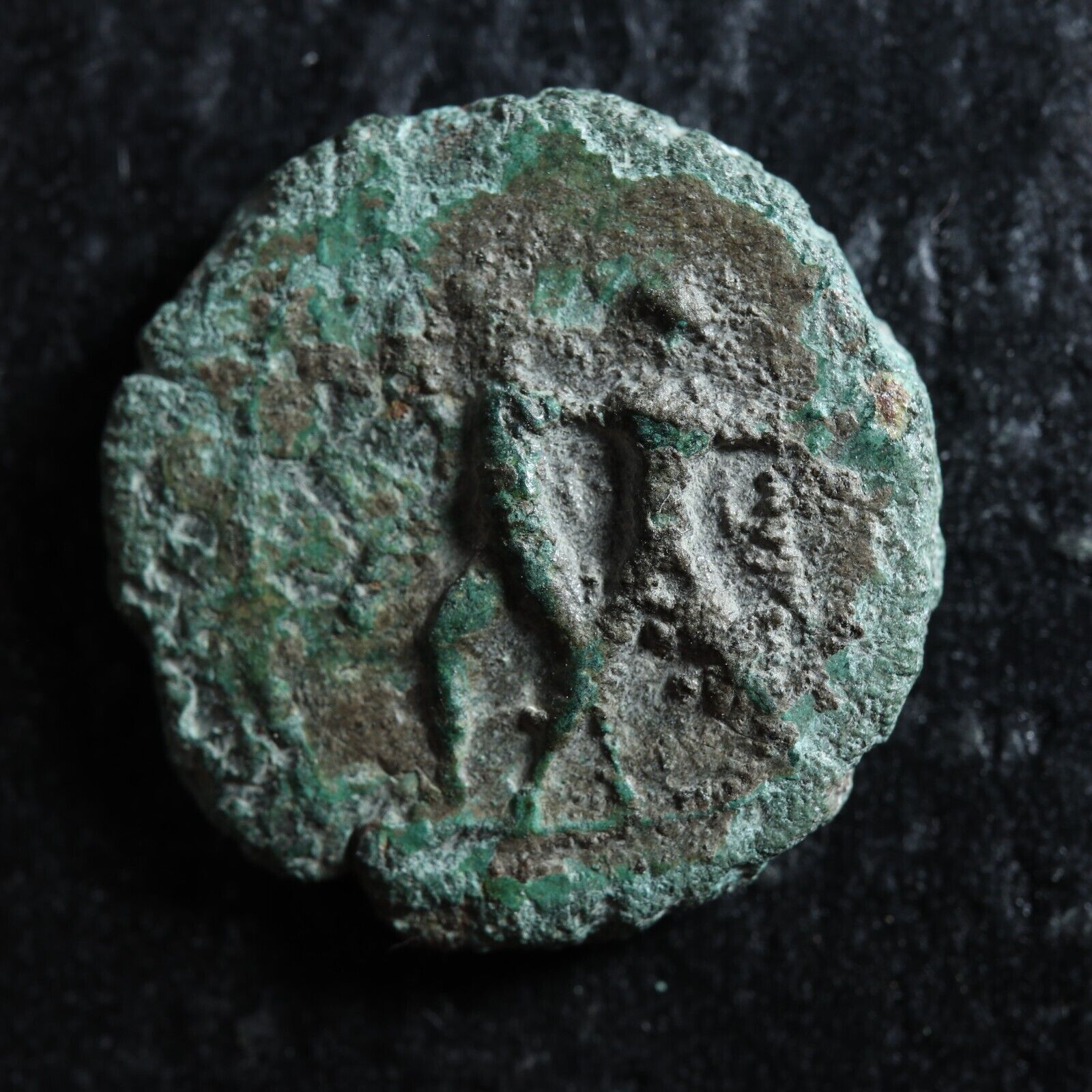
Etenna, Pisidia, AE14, 1st century BC40.00$ Ajouter au panierSNG France 1532-3; SNG von Aulock, Pisidien II, 76; SNG Copenhagen 149-50.Obv.: ET EN, Nymph advancing right; in front, coiled snake, behind, jug.Rev.: Two men standing side by side; the left brandishing double-axe, the right sickle.1.42 g14 mm______________________________ -
Sardes Lydia AE15 -133 to -1 Herakles Amphora
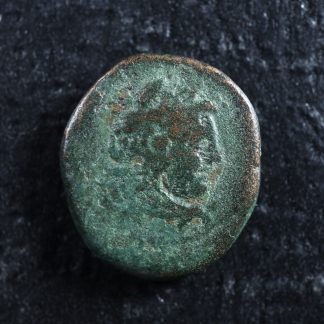
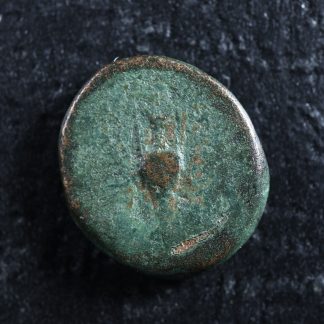
40.00$ Ajouter au panierSardes, Lydia, AE15, -133 to -1BMC 45; SNG Cop. 469; GRPC Lydia 176.Obv.: Head of Herakles to right, wearing lion skin headdress.Rev.: ΣAPΔIANΩN, Amphora.3.36 g15 mm______________________________ -
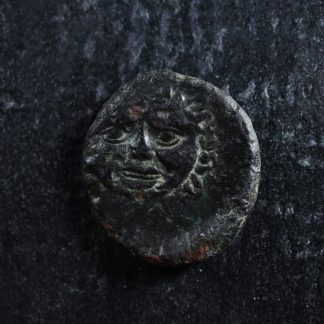

Kamarina Sicily AE13 Circa -420 to -405 Gorgoneion Owl Lizard
Kamarina, Sicily, AE13 Onkia, Circa -420 to -40580.00$ Ajouter au panierWestermark & Jenkins Period 3, Type A, 182; CNS 2; HGC 2, 552.Obv.: Facing gorgoneion.Rev.: KAMA upwards to left, Owl standing left, head facing, grasping lizard; pellet (mark of value) in exergue.1.43 g12.6 mm______________________________ -
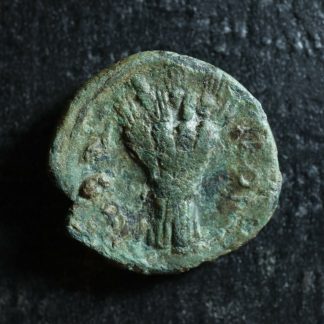
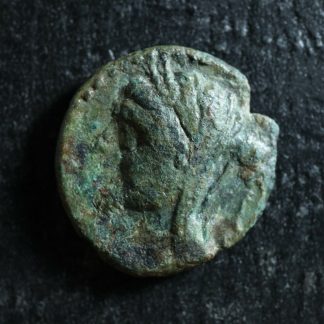
Leontinoi Sicily AE15 -207 to -200 Demeter bundle of grain ears
75.00$ Ajouter au panierLeontinoi, Sicily, AE15, -207 to -200BAR Issue 2; CNS 9; HGC 2, 721.Obv.: Veiled and wreathed head of Demeter left; plow to right.Rev.: ΛEON-TINΩN, Tied bundle of grain ears.2.61 g15 mm______________________________